Showing posts with label treatment. Show all posts

Wednesday, April 12, 2017

Soy Challenge Success!

As I have posted everywhere now (a wee bit excited and relieved), James passed his recent soy challenge. The challenge was a different from his previous one, not only in the fact that it didn't end with epinephrine, steroids, and fear.

Disclaimer: This is a description of one experience with a food challenge. It is not meant to be a guide on how food challenges should be run, medical advice, or anything besides a personal narrative.

Skin Test First

As I've mentioned previously, getting James to the point of no antihistamines for a skin test/food challenge has been difficult. So, we combined the skin test and food challenge into one day. I wanted to get all his skin testing done but the allergist (not James's usual allergist, more on that later) didn't want to stress him out too keep things fairly calm. So, we settled on three tests: soy, wheat, and peanut.

Have you ever seen a more perfect SPT?


I've forgotten which the nurse said was wheat vs soy, but no matter. The histamine reacted, the rest did not, and that was perfect.

A Group Challenge

I knew ahead of time that James would be having a group challenge but I wasn't entirely sure what that would entail, other than there would be other people. My primary concern was if people would be challenging other foods that he is allergic to. My secondary concern was snacks; they had told us to bring snacks but I didn't want to bring something that would be a problem, allergy-wise, for someone else.

What I didn't know until we got there was that James's usual allergist would not be preforming the challenge. I did a fair amount of acting like it was no big deal (and it turned out not to be because the allergist running the challenge was excellent), James likes and trusts his allergist, not allergist's in general. I was concerned he would balk, but he did great (the entire time).

I am not sure how many offices do group challenges. Our experience was in Kaiser San Diego. I asked about the rational (mostly to make conversation because we were there for almost four hours). There is a long wait list (no kidding!). When they have one on one challenges, the primary person preforming the challenge is a nurse (this was our previous experience) and you only see the allergist if there is a problem or at the end. Kaiser is actually shorter on nurses than allergist. The allergist is able to monitor up to four patients at a time whereas the nurse can only monitor one. So, they can move the list faster by having an allergist do four challenges at once. 

I actually liked it better, because the allergist was in the room the entire time, mostly working on paperwork, but there. The allergist did say that they only schedule group challenges for the patients they are most confident will pass.

General Procedures

I believe James drank a total of eight ounces of soy milk, divided into seven different doses. He started with a drop on the tongue and ended with 4 ounces in a cup. There were 15 minutes in between each dose and an hour waiting at the end. He was allowed to drink Gatorade in between doses. Although he complained of the taste, he drank the doses quickly. Except for complaining that the soy milk was disgusting enough to make him want to vomit (quickly adding it was an opinion not a physical reaction), the challenge literally went that smoothly with no hiccups or concerning signs at all. 

Epi-Pen Information

Since we were there, I decided to ask the allergist about Kaiser's Epi-Pen policies. This is from casual conversation and not a "written in stone" policy. According to the allergist, Kaiser Southern California will not be switching to the generic Epi-Pen this year but will be staying with Mylan brand (depending on your plan, of course, but the allergist's first choice will be to write an Epi-Pen prescription). Kaiser is "not really" a commercial plan and the allergists will not be filling out vouchers for Auvi-Q. I did not push this at all, because James is comfortable with the Epi-Pen, having used it before, and I am not looking to switch. If I were, I would definitely question this decision.

Next Steps

We were advised to have James keep soy in his diet 2-4 times a week. I can tell you from his complete disgust during the challenge he won't be consuming soy milk. I'm going to try both tofu and edamame as two sources high in protein, hopefully he will like one or both of them.

James has a wheat challenge in a couple weeks, same allergist, same group challenge. I am hoping now that we have done this once, know the procedure, and he's passed, it will be emotionally easier. It will certainly taste better and so be easier in that respect. I was so proud of James, because he was (outwardly) so calm and composed about the entire challenge. It was not easy for me to stay calm so I can only imagine for him.

This weekend, he will be trying fresh tomato at home (he has OAS to it, but never a severe reaction). I am supposed to contact his allergist when he, presumably, passes. He passed! At that time, I will ask to be put on the wait list for peanut, as well as ask about trying mango and watermelon at home.

The wait list is four to six months, and to be honest, I think we will be glad for the break and will try mango and watermelon at our leisure while waiting. Tree nuts would be the next step, but James is not ready to think about that at this point.

Monday, August 15, 2016

Is this it?


We traveled to New York last month for James's 20 month follow up with Dr. Li. I really have no new blood work results to report, because, on paper, his testing is perfect. His improvements, even from last July, when he had already made a huge number of gains, are incredible. With that in mind, my first query to Dr. Li was:

"Is this it?"

James's quality of life has improved so significantly since beginning treatment, combined with the difficulty of tapering his Allegra down further, made me think that perhaps we had reached the end point of his treatment - and I was ok with that.

Dr. Li felt he still could go farther.

Her first recommendation was to have him have a food challenge, still on Allegra, and at most half the normal dose for a food challenge, eating that amount regularly. One of the benefits of seeing Dr. Li each day was that I could relay this to James's local allergist and have a response while still in daily contact with Dr. Li. Many times I have wished I could get them both in the same room to hash things out - this was the next best thing.

James's local allergist did not outright say no, but definitely expressed concerns. His first concern was that if James was still taking Allegra, minor symptoms might be suppressed and any reaction might be more serious before noticed. To combat this, the allergist said we would have to admit James to the hospital for the challenge and have an IV put in.

The allergist's second concern was with EoE. I know this is a controversial subject. I am reporting his concerns, not adding commentary because I think the research is still out. He felt that OIT had an increased risk of EoE and not doing a full challenge was too similar to OIT. Challenging when we weren't sure that James's immune system was fully healed could put him at a higher risk.

So, ultimately, the ball was in my court. James's allergist was willing, but ... Dr. Li recommended it.

I asked Dr. Li if it was even possible for James to develop EoE; his blood work shows 0% eosinophils in his blood. She said that yes, he could. Eosinophils can be in tissue and not blood.

I will be honest, EoE terrifies me. James has had digestive problems in the past (and to some extent, continuing) and I don't want to tip the scales. It seems the ultimate jumping out of the frying pan into
the fire.

And so, we decided to wait.

Inadvertently, we seem to have started James's Allegra taper again. Last Tues, the pills got stuck in his throat and he threw them up. This Tues, he forgot to take them. Unless I hear otherwise, I'm going to drop his Tuesday dose since he's gone two weeks without it with seemingly little effects. October will be a year since we began the taper. My goal now is to be done by next October!

Monday, November 23, 2015

Baby Steps

"You have done wonderful work."

Typical of Dr. Li, ever modest, this was her response to James's blood test results.

As I suspected, not much has changed in every day life. James needs to be off of his Allegra to move forward, so that is the next step. Since he has a history of chronic hives and has been using a daily antihistamine for a decade, this will be a long process.

Dr. Li is also going to send herbs to help with viruses, hopefully eliminating any viral hives. When he is no longer taking Allegra, he will be able to start with his local allergist, to do skin testing, and hopefully food challenges.

While this definitely is not an exciting update, it is the behind the scenes of what happens next (for us). While we would love blood testing to be accurate enough to get results and start eating the food, that is not reality. It tests my patience, but not my thankfulness.


Wednesday, November 11, 2015

Stunning One Year Test Results

Yesterday, I read off James's test results, starting with the environmentals which were at the top, "Normal, normal, normal, slightly high, normal - wait a minute, these are all normal." I scrolled down to the food results, "Normal, normal normal."

Background


James, 13, starting seeing Dr. Li after multiple life threatening reactions, starting when he was 10 years old. Despite low IgEs, his allergies were progressing, including having OAS to multiple fruits and vegetables. He had had life long GI issues, chronic hives, and a cough after exercise that could lead to throwing up.

Test Results


Last years results are from July 2014, except for the tree nuts, which are from Sept. 2014.

Food

Wheat: 1.61 to 0.18 
Soy: 1.27 to 0.15
Lentil: 0.50 to <0.10
Peanut: 1.50 to 0.30
Walnut: 0.31 to <0.10
Hazelnut: 0.46 to <0.10
Pistachio: 0.97 to 0.24
Almond: 0.64 to <0.10

Environmentals


Bermuda Grass: 2.36 to 0.24
Rye Grass: 3.28 to 0.37
Mugwort: 1.23 to <0.10
Russian Thistle: 2.87 to 0.44
Elm: 2.27 to 0.18
Cockroach: 1.54 to 0.27
Juniper: 1.24 to 0.18
Cedar: 0.63 to <0.10

Total IgE: 65.7 to 30.1


Questions


Where do we go from here?


I'm not really sure. I am waiting for the official report to come in the mail and then I will send them to Dr. Li. My first priority is to be able to reduce James's Allegra, because he cannot have any food challenges if he still is taking it. In a twist (because nothing is every simple), he had minor hives twice last week. I believe he had a virus which caused them, but it's not perfectly clear that was the case. So, I was supposed to start reducing his Allegra and didn't. Hopefully, by the time of our next consult, he will still be hive free and we can begin that process.

What did you do?


I've blogged on here a few times about James's protocol: here, here, and here. This relates our experience at "TCM camp" this summer.

His protocol has changed more often than I have blogged. His current protocol is:

Mei Huang 5 Tea: 5 capsules 2 times a day
Mu Lian Tea: 5 pills 2 times a day
Good Mood Tea: 5 pills 2 times a day
Shi Zhen Tea 1A: 8 capsules 2 times a day
Shu Chuan Tea: 6 capsules 2 times a day
Cream 3VB: 2 times a day application, after bath and shower
Huang Lian: 2 tsp in bath once a day
Niu Bang Zi: 2 packets in bath once a day

Remember however that Dr. Li's protocols are personalized so these are only examples of James's protocols, not prescriptions that can be generalized.

Other than doing our best to eat healthy (and he eats plenty of junk - don't get the wrong idea), we don't do anything else: no probiotics, no cranberry juice, nothing supplementation wise. I am not saying there aren't benefits. This was just our choice.

My Own Thoughts


Having his blood work done was scary. There was a real chance that we wouldn't see progress in the first year and I know I would have been disheartened. The treatment is, as I have always tried to relay, intense. It has taken a lot of dedication and money.

I was hoping for improvement, but never expected such complete, positive results. I have some speculation as to why, but it is complete speculation.

1. His IgEs were low to being with, even though those low numbers had resulted in anaphylaxis. Basically, he didn't have as far to go.

2. Even though he was older, his immune system was obviously in flux, in the wrong way, when we began. Maybe it was "open" to being shifted in the other direction.

In Between Here and There


We are kind of in a weird place right now - in the best possible way. I am going to FABlogcon this weekend, and is James even really allergic anymore? I am not complaining. I plan to enjoy myself. But, like always, I would love to be at the end. I have already allowed myself daydreams of wheat bread and dim sum. I will keep posting at times and hopefully will be able to share successful food challenges in the not too distant future, but I hopefully soon, I will be wrapping things up here.

I would be happy to answer anyone's questions. 


Friday, October 23, 2015

One Year Down

As of Sunday, James will have been seeing Dr. Li for a year. I thought I would want to celebrate, but to be honest, it seems routine. My guess would be that 1) he hasn't had any follow up blood work (he wants to wait until after Halloween for a draw) and 2) we are likely, at best, a third through treatment. It is hard to get excited at this point.

What I've Learned from One Year


Things will go wrong - Don't Panic

Missing Doses

There will be times when you miss doses, from forgetting, running out, or schedule issues. Missing a dose here or there is not worth stress. Do your best to be as consistent as possible, and accept that life happens and sometimes your schedule is thrown off.

Reactions

James has had reactions this year and hives and digestive problems however, he's had a lot fewer than ever. He has always had reactions and hives and digestive problems. Because the herbs are new to you, there will be a temptation to blame every problem on the herbs. It is possible that the herbs cause a problem. And, we have been handling hives, reactions, and digestive problems. You can continue to handle what comes using your own common sense. This doesn't mean to never consult your doctors. But, don't give up your own competency because you are doing something new.

Carry a Towel

When traveling, bring your own towels – the cream stains everything. Using your own towels will save you from embarrassment. If you are using Cream IIIb or IVB, green towels are best.


Please be thinking of us in the next couple weeks as we move forward with James's first year tests.

Tuesday, October 6, 2015

Making Progress

The Good News


James is still free of hives. If he continues hive-free this month, Dr. Li will have us begin to lessen his antihistamine dosage.

We have now "graduated" to every other month phone consults. My excitement is not at less contact with Dr. Li, but at the knowledge that she feels James has made enough progress to need less contact.

Dr. Li has switched from Mei Huang 4 to Mei Huang 5. James has used varying doses of Mei Huang 4 (and 3). At his highest dose, he was taking 20 pills two times a day. With Mei Huang 5, his ultimate dose will be only five pills two times a day. Currently, he is taking three because he felt nauseous with the higher dose. This has happened with his pills before and as he becomes accustomed, he is able to take more. So, while the dosage will increase slightly, few pills has meant a lower cost. We have gone from $1200 a month to $900 a month.

The Bad News


James had a minor reaction this week. I am not sure to what. He complained of throat itchiness and knew it was a reaction. It resolved with Benadryl.

All he had had was chicken and OJ. At first I thought perhaps his OAS now included oranges (although juices usually are pasteurized).  The pollen family his other OAS foods fall under is grass and orange is commonly listed in the cross reactivity lists. However, he has since had the same juice with no problems.

So, I turn to the chicken, which was a Costco rotisserie chicken. We picked it up on the way home from a museum and not from our normal Costco. It leads me to wonder if this Costco was not careful in preparing it, leading to cross contact with nuts from their bakery department. If this is the case, it was a very minor reaction and shows a lot of improvement from his previous cross contact reactions. And I will be more careful in the future questioning the stores before buying a rotisserie chicken.


Monday, August 3, 2015

Protocol Update

James's protocol has changed practical every month since October. Some months, the changes were minor, increasing dosages, adding one herb. Some months, much more significant. My most complete description of his protocol was in April with and update in June. At that point, I thought his protocol had stabilized somewhat because, although his protocol had changed a lot since his April update, there were no changes from May to June, only the second time since he had begun he had no changes at all. Little did I know that our visit in July would radically change his herbs once again.

To backtrack a little, he had a Prostaglandin D2 test, requested by Dr. Li, in June. The results were normal. Dr. Li was surprised. She was actually so certain that they would not be that when I said we had the test done, she completed my sentence by saying, "and the results were high." She then asked about a string of other tests, which we hadn't had done (she hadn't asked for them). And continued as if he had Mast Cell Activation Disorder. And, I think this is where we will stand. He will have no official diagnosis and if he stays reasonably stable (at this point, he is. He has improved considerably both under her care and since being diagnosed at all and cleaning his diet), I will not pursue further testing. If at some point his health slips, I know the direction to push in.

Current Protocol:


Put on two times a day, after bath and after shower. He is working up to complete coverage after bath, starting with just his legs. Right now, we use about six jars a month. The cream is IgE lowering, as can be seen in this abstract.          


Huang Lian and Niu Bang Zi


Both are bath herbs and he is working up to his full dose of two teaspoons of Huang Liang and two packets of Niu Bang Zi. He does this bath once a day.


He takes ten Mei Huang 4 twice a day. This is half the dose he was taking previously. Mei Huang 4 has some (not all) of the components of FAFH-2. 


He takes five Mu Lian tea two times a day.


He takes five Good Mood tea twice a day and this perhaps has been the most stable part of his protocol.


He takes six  Shi Zhen Tea 1A two times a day.


Finally, he takes six Shu Chuan Tea two times a day. This was the one I was happiest to add, as I know it is used, in part, to help with environmental allergies.

With additions and subtractions, our cost stayed steady this month at just over $1000.


Monday, June 22, 2015

Three's a Crowd?

Balancing Between a Research Allergist and a Local Allergist


Dr. Li does not replace your local allergist and, in fact, on her website under the FAQs, she outlines why she likes to work with local physicians and why they will need to do your blood work. Still, almost from the beginning, I have struggled to decide what issues are a local allergist issue and what are ones for Dr. Li.

An example that worked well


In March, James had hives for about three weeks. When they first began, we treated them ourselves and thought I would mention them to Dr. Li during our regular consult. Hives are not unusual for James.

As the week progressed and they were not under control, it became obvious that they worsened during bath and shower (likely from the hot water). I contacted Dr. Li by e-mail to see if we could eliminate one to reduce his water time. She responded quickly and told us to stop his bath until further notice.

By the beginning of the next week, we still didn't have his hives under control, so I e-mailed his allergist for advice on a protocol to help control the hives. It took a couple of weeks and a few e-mails to get a protocol to begin to work. The hives were improved but he still had daily breakthrough hives. 

During that time, we also had our regular phone consult with Dr. Li. She adjusted her protocol as well. Two days after her changes, the hives stopped and I started reducing his western medicines. It took about a week to return to his previous levels and, although he continues to have mild hives occasionally, for the most part, the issue is resolved.

An example I'm less comfortable with


Dr. Li had casually mentioned mast cells to me a couple times (note to self: Dr. Li doesn't casually mention. If she says something, it is not in passing.). After the second time, I e-mailed James's local allergist asking if Mast Cell Activation Syndrome* was a possibility for James. And he replied yes, but he also sees people that it could be a possibility for that don't have it. So, we agreed to wait until James already needed blood work and run a tryptase* test.

Which we did and the results were normal. And now Dr. Li says not so casually that she is concerned about his mast cells and she wants him tested, but she wants a Prostglandin D2* test. And this puts me in the somewhat awkward position of returning to our local allergist, 'Thanks for the first test. Yes, I know it was normal. Hmm. I would really like this second test, supposed to be better. I hear. Carry on."

This is not a matter of not trusting James's local allergist, because I do, this is a matter of Dr. Li having a more complete picture of James's health. Although we don't talk long, we have had ten consults between October and now (nine planned and one in between). I have attempted to document for her each symptom and improvement. His local allergist has had one consult and a handful of e-mails.

I should add that our local allergist is really supportive of our seeing Dr. Li and told us she was "brilliant." So, this is more about communication and using each of their time and resources wisely.

Have you had any issues balancing doctors? How do you handle it?

*  Definitions available on the Glossary page

Friday, June 19, 2015

Updates: Protocol and Finances

Treatment Update:


I outlined James's daily protocol back in April. He's gone through a few, mostly minor, adjustments since then. His protocol as it stands today is:

Mei Huang Tea 4, 20 pills, 2 times a day
Shi Zhen 1A tea, 6 capsules, 2 times a day
Good Mood Tea, 5 capsules, 2 times a day
Cream III-VB, once a day only on his lower legs and once a day full body. We use about a jar a week, but I suspect this will go up as he is now using it on his lower legs. This is new.
Huang Lian bath  - this is new and was on back order, so we weren't charged and aren't starting it yet

The total for all this (minus the bath) was just over $1000.

Dr. Li has asked for another test from our allergist, a Progstaglandin D2 test, which is a marker for Mast Cell Activation Syndrome. Imagine my surprise upon reading the e-mail from him that he was happy to order the test - James's urine would have to be collected for 24 hours. Honestly, things like this are not in the baby books! I am certainly glad he is older.

She also asked us to come to New York in July instead of October for a session she runs of weekly appointments, one consult and then a week's worth of acupuncture. So, the beginning of this week was a bit of scrambling for travel arrangements but everything came together nicely.

Financial Update


Here's my initial thoughts on affording TCM and truly our costs have only gone up since then, especially with an unexpected trip this summer. 


The Cell Phone

What a (continuing) saga! Ting did not work out at all. It may be a good option if you are not porting a number however it was nothing but headaches for me. My number ported, but I was not able to text. I could make calls and receive texts, but I could not send any texts. I contacted their customer service and after they attempted helping me eventually their response was, "Is it raining there?" I live in a drought zone. "Well it's raining here. I think that's interfering with your signal." And this is when my head exploded.

My husband had to take over and they had him do a complete reboot of my phone, which means that I was left with a phone that could only make phone calls. I lasted approximately 1 1/2 hours.

My husband found Scratch Wireless. They offer free texting and free everything over wi-fi. If you don't have wi-fi, you can pay for a pass. You need to use their phone (it's a Coolpad something - a Chinese made smartphone. It is not fancy but it works. It's $99 though them. You can buy it used but we bought it new because I have had enough problems).

This works for us because we have no-data cap cell phone internet through my husband's work. It can come with me wherever I go. If you live in an area of high wi-fi coverage, this would work. If you would need to regularly purchase a pass, it might not be worth it.

We decided to also buy one for James. We have pre-order the Veta Epi-Pen case and up until now, he has not had a cell phone.

Edited: Scratch is no longer offering free texting, only over wi-fe. And, honestly, after six months, I was already frustrated with the service and the phone. I have asked for a "grown-up phone" for Christmas.

Satellite

Satellite has been cancelled. This is much more of annoyance for my husband than I. Half the time I don't even notice if there's a buffering or if the show if running properly. That said, Sling TV has a tendency to get stuck at the end of a show and the next episode needs to be selected in order to be watched. Some channels (ESPN) don't run the commercials; they put a graphic up. You would think this is a benefit but ESPN it turns out has a ton of commercials. It's more graphic than programming. I, of course, think this is a reason to not watch ESPN, but not everyone in my household agrees.

Mental Status

The past week has been a strain: unexpected travel, unexpected testing, rising costs, downgrading of lifestyle (first world problem :-) ). I did what every good Southern Californian does when under stress - I headed to the beach. 


A small reminder to myself, that it is most important when the burdens seem high, to continue living our lives, enjoying ourselves, and making time for the fun.


Friday, June 12, 2015

New Research, New Hope Part 4 #FARECon

Rapid Suppression of Food Allergy by Dr. Finkelman

His Talk


He would like to use a rapid desensitization, a process which is currently most often used in patients who are allergic to a medication they need for a treatment, for food allergies. The idea behind rapid desensitization is that the patients are injected with increasing doses of the allergen every 30-60 minutes, starting with a dose that is too small to cause a reaction. In the case mentioned above (of a drug desensitization), the tolerance is temporary and the process can also be complicated by reactions, mild to severe.

Dr. Finkelman would like to develop an anti-IgE or an anti-FcεRIα antibody useful for rapid, permanent desensitization to all antigens. This would be a similar drug to  Xolair in function but he wants to improve on Xolair in the following ways: Xolair is slow acting, expensive, and does not work well in patients with high IgEs.

His lab began by injecting mice with an anti-mouse FcεRIα monoconol antibody (mAB). This resulted in a decrease in body temperature for the mice, which is an indication in mice of anaphlyaxsis. He then did rapid desensitization with the anti-mouse  FcεRIα mAB and was able to prolong sensitization to the anti-mouse FcεRIα mAB for 12 days after the initial rapid desensitization. 

The next step was to see if desensitizing mice using anti-mouse FcεRIα mAB would also result in a desensitization of any other allergens. So, they treated egg-allergic mice with the rapid desensitization method and did a food challenge and the mice were protected from their allergen. 

Dr. Finkelman's goal is to completely and safely suppress IgE mediated disease in under 24 hours.
He has five steps he says he needs to accomplish to meet that goal:

1. An anti-human FcεRIα mAB
2. Mice that have human mast cells or human FcεRIα on mouse mast cells
3. A food allergy model in mice that have human FcεRIα 
4. More rapid removal of IgE from mast cells
5. Back-up safety measures

They have already met steps one, two and four with trials using human FcεRIα on mouse mast cells and the  anti-human FcεRIα mAB. During these trials, they have been able to complete desensitization in less than 24 hours that lasts six days, but because of the expense of the antibody, they haven't had any longer trials.

They are still working on step three, making a food allergy model mouse. They do have a mouse currently that generate human mast cells, about 200 times the normal amount for a mouse, and human IgE. These would be a mouse equivalent for a human with mastocytosis.

In these mice, they have been able to achieve partial success with rapid desensitization. During the challenge portion, the mice have been desensitized still get sick, however they do not go into anaphylaxsis.

Dr. Finkelman said they are continuing to work on step five as well, trying a drug cocktail in addition to the anti-human FcεRIα mAB. With the mastocytosis mice, however, they continued to get sick, if not anaphylactic, so this is a portion they are still working on.

When the mouse studies are finished, they will need to test for safety and efficacy in monkeys prior to beginning a human trial.

During the question portion of the presentation, Dr. Finkelman was asked the dangers of removing nearly all of the IgE from the human immune system. His response was that this is something that is already been done, with Xolair patients, and in the Western world, as the risk from parasites was low, he did not believe it was a concern.

My Thoughts


When Dr. Finkelman said his goal was to suppress IgE-mediate diseases in 24 hours, my heart soared. How could it not? The path we are taking is years and here is someone, apparently not insane, who thinks that one day he will be able to travel the same path in 24 hours.

The thoughtfulness with which he laid out his research, he covered different variations, safety concerns, and went through step by step, impressed me.

That said, I think this may, one day, be an excellent choice for those most extreme cases of allergic conditions. Perhaps I am overly cautious of side effects, but as we have seen with Xolair, side effects continue to be found after the drug is approved. Xolair is amazing for those who need it, but not to be undertaken lightly. I feel the same will be true for this future treatment.

Secondly, I do wonder at the blasé response to the question of the IgE removal. IgE is not a vestigial organ like the appendix. It is true that we have few parasites in the Western world, however, people travel. 

For me, this treatment really boils down to need. If James had no other options and some allergic illnesses are that severe, it would sound amazing. With other options available, it sounds more like using a sledgehammer to kill a gnat.


Monday, June 8, 2015

New Research, New Hope Part 3 #FARECon

Dr. Carrie Nagler and the Microbiome

Some Background Information


I took this course earlier this year at the recommendation of someone from the CHA FB group . It is now available to take at your own pace and I highly recommend it if you are interested in health. It did not focus only on allergies. One personal caveat - I felt like, at times, it glorified a primitive lifestyle, a modern take on the "noble savage." I have my own reservations about balance between modern life and health, but I do love my indoor plumbing.

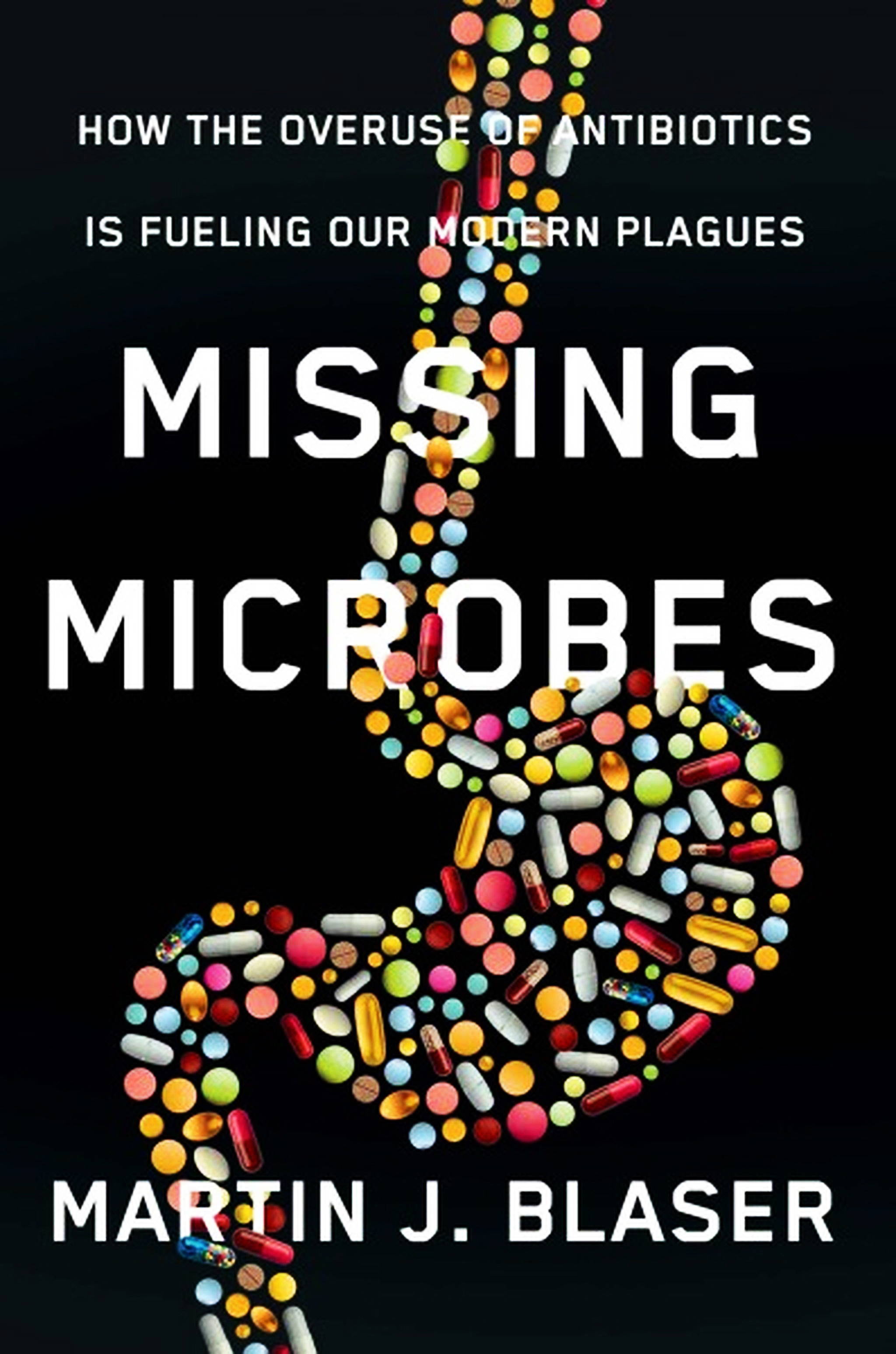
The Missing Microbe (affiliate link)


I myself have not read this book, but have had it recommended from multiple sources so it has risen on my rather long to read pile. Dr. Nagler recommended it in her lecture and The Gut Check Course I recommended above also recommended it.

Dr. Nagler's Talk


She is currently working with mouse models. When they give antibiotics, not only are microbiotics eliminated, but the peanut IgE rises. So, this leads them to the question: what microbes are protecting the mice or keeping the IgE low?

In the lab, the make germ free mice and chose two broad groups of microbiotics to test: Bacteroides, which are associated with digested food, and Clostridia, which is associated with the epithelial surface. They have found that Clostridia protects against the allergic response.

But how? And how can they be used?

What they have found is that Clostridia makes the cytokine IL-22, which plays a role in regulating the epithelium. The epithelium makes a protective barrier and IL-22 regulates production of mucous, the ability of the epithelium to proliferate, and the natural antibiotics made by the body help to protect the epithelium. Basically, it helps control intestinal permeability.

So, they gave an oral food challenge to three different groups of mice: one untreated, one treated with antibiotics, one treated with antibiotics and with IL-22, and one treated with antibiotics and Clostridia. The mice treated with antibiotics had higher than normal levels of peanuts allergen in their bloodstream after a food challenge. Those levels continued to rise. But, those who were treated with IL-22 or Clostridia had the allergen blocked from their bloodstream.

She has been collaborating with a university in Italy on a study on cow's milk allergic children, both identifying if they have a different microbiome from non-allergic children (they do) and developing a formula to help them gain tolerance. When the children who used the tolerance inducing formula had their microbiome compared to those who did not, those who gained tolerance had also gained Clostridia in their microbiome.

The next step is a pre-clinical model, taking fecal material from healthy children and cow's milk allergic children and put them into germ free mice, sensitize them with cow's milk, and then introduce different candidate drugs. They have three possible drugs they will try: a Clostridia based live biotherapeutics (which is already approved for IBD), identify and test pre-biotic fibers to expand butyrate producing Clostridia in vivo, and encapsulate butyrate in nano-formulations for targeted delivery to different sites within the gut.

Questions She Answered


1. There is no probiotic on the market that has been tested for food allergies now. They are mostly based on Lactobacillus (yogurt). The best thing you can do now for your microbiome is to eat a high fiber diet.

2. Try to limit your antibiotic use: get cultures before prescriptions, don't use antibiotic soap, try to eat antibiotic free food, etc.

3. Fecal transplants are not recommended for food allergies. They have not been proven safe for this condition for a variety of reasons.

My Thoughts


Having a child who has had (but has been better since starting with Dr. Li) lifelong digestive problems, I had a personal interest in Dr. Nagler's talk. James is not currently taking any probiotics (see the answer #1 under "Questions She Answered," which was also similar to the information I learned in the Gut Check class). If he needed to take antibiotics, I would have him take probiotics for the course and for some time after.

I plan to follow this study (as well as the work of Mimi Tang) and feel very fortunate I was able to hear her speak. I will reiterate, considering the audience, I'm disappointed that none of the speakers presented currently available treatment options.


Monday, June 1, 2015

New Research, New Hope Part 2 #FAREcon

A Peanut Vaccine


Notes from Dr. Baker's Presentation 


Vaccines produce a Th2 response, through their adjuvant, usually alum. Alum is an aluminum powder that's inflammatory. It wakes up the immune system and tells it to respond. The inflammation and soreness at the injection site is caused by alum.


The concern is that, since alum produces a Th2 response, could it cause allergies. He said he did not think so however, a different type of adjuvant that produced other types of T-cell responses, ones turn off the Th2 (allergic) response are needed.


One of the things they are doing in his lab is producing other kinds of adjuvants, one that produces a Th17 response. Th17 regulates or turns off the allergic response. Eventually, they want to make a vaccine for food allergies. Their vaccine involves nano scale oil droplets. They put the allergen or vaccine in the oil droplets and then put them on the surface of the nasal mucosa. The droplets penetrate the surface and produce an immune response. Using a green marker, they can see that the vaccine penetrates the nose and go throughout lymph nodes as well.

His work so far has been with the RSV vaccine. It particularly has had problems when used with alum because the alum can cause an allergic response to the virus. Some died in the 1960s when they got infected, because the vaccine induced an allergic response to the virus.

His question was: can they produce a more protective immune response and turn off the allergic response using the nano emulsion vaccine. In mouse trials, they had three group exposed to the RSV virus: with the nano-emulsion vaccine, a standard alum adjuvant, and no vaccine. Animals given the alum vaccine had eosiniphils (associated with allergies) in their blood, but no neutrophils or macrophils, The nano-emulsion group had no eosiniphils but had monocytes associated with a Th17 reaction, showing a priming of the regulatory reaction and a driving away from an allergic reaction.

Now they are doing work in mice to try to immunize food allergic mice with the allergic food in the nano-emulsion.

A Little History


A "peanut vaccine" has been in trial before by Dr. Wood et al. It was administered rectally and was not a success. 20% of the subjects had severe allergic reactions despite the vaccine.

Dr. Li et al are also investigating a peanut vaccine. It looks promising but the trials are also in mice currently, not people.

There may be other trials I am unaware of.

My Thoughts


People think that fear of vaccines is a modern issue. However, there has been a fear of vaccines since Edward Jenner first inoculated against smallpox. I don't really want to make this a general vaccine issue, but I will say regarding a food allergy vaccine, I understand the fear of those first parents who had their children vaccinated. 'You want to take something that could kill my child, and put it directly into my child.'

It relates very directly to my fear of roller coasters. In a very general way, I understand the science. I can even explain some of the processes. In the case of the roller coaster, given enough time, I could likely solve some of the equations to prove I won't die.

But, at a gut level, it still seems to be magic.


Friday, May 29, 2015

New Research, New Hope Part 1 #FAREcon


CDC. HIV Surveillance Report,2013; vol. 25. Published February 2015.
+Case Fatality and Population Morality Associated with Anaphylaxis in the United StatesJ Allergy Clin Immunol. 2014 Apr; 133(4): 1075–1083. (includes deaths due to anaphylaxis from any cause)

Dr. Baker began his introductory comments comparing the food allergy epidemic with the AIDS epidemic. I understand the analogy, but I also found it offensive. Obviously, I feel passionately about food allergies. I can feel passionately about food allergies and compassionately for people fighting other battles. I also know well the struggle with anxiety that people with food allergies face. And, to catastrophize food allergies raises the often high anxiety of people's real stress learning to manage food allergies. 

Every life lost, in both column, is a tragedy. 


Dupilumab


The first treatment that Dr. Baker spoke of, it's currently in trials for eczema and asthma and has good results so far. 

As a basic review (forgive my simplification), the portion of the immune system that regulates the immune system is Th2 (stands for T-helper). And when TH2 cells are activated, there are (scientific jargon coming) a whole mess of proteins they can release. Two of these are IL-4 and IL-13 (IL=interleukin, which is not nearly as easy to remember as T-helper. Dupilumap was developed to block the release of IL-4 and IL-13.

Dr. Baker spoke hopefully of the possibility that Dupilumab would be useful for people with food allergies as it's original trial was for eczema and it was found to improve asthma. Additionally, it seemed to block the atopic march.

He stated that for the six months it has been trialed, it has been shown to be safe, with the people in the placebo group to have had greater side effects, from their uncontrolled eczema and asthma. 


My thoughts


For many people with allergies, eczema and asthma are an enormous problem, if not a greater problem. I well remember the impact of sleepless nights from when James had hives. I can only imagine uncontrolled eczema, the fear of infection, the itching, and the pain. Hopefully, this will offer relief for those people who have tried everything and cannot find it.

To present this first, and seemingly as the best hope, for people with food allergies when not a single piece of data has been collected regarding food allergies seemed odd. It's data I agree, I would love to see. In a conference, where parents have come to get "New Hope," I'm concerned it may have been putting the cart before the horse to suggest that this will provide a cure. In my first post, I analyzed three different food allergy treatments currently being used, in private practice and in trial. I could have added more. 

And always, I was concerned about the six months of safety data. That, of course, is the risk/benefit analysis that we as parents, as people, as patients have to make every time we choose to take (or not) a medication. 


Part 2: The Peanut Vaccine

Friday, May 22, 2015

Fear and Hope, James's Perspective

James is participating in a Read-A-Thon on Tuesday, started by a remarkable young woman who is in a peanut clinical trial. Technically, the Read-a-Thon is Monday, but we will be enjoying the company of our family. On Tuesday, we will be enjoying the quiet of our car on the way home, perfect for long stretches of reading.

I asked him to write the description on his page, answering the question as to why raising money for food allergy research is important.


Having anaphylaxis used to truly scare me, every day, all the time. I wondered why people couldn’t just create nutritional pills to give you your food. That would have already made me feel ten times safer than the alternative of eating regular food. But now I’m getting allergy treatment with Dr Li and I’m very thankful for it because worrying isn’t as much a big part of my life as it used to be. I can feel safe about about eating things I’m familiar with because I know the treatment will at least keep me from getting any serious reactions.

I didn't edit anything he wrote, so I want to be clear, the number of food allergies hasn't decreased. He is eating a wider diet because he isn't scared.

To be scared of food. To have a child scared of food. It's a heavy burden.

Obviously, James is in treatment with the goal of more than freedom from fear. But, when we started treatment, we told him, "This may not be a cure. At the end, you may not be be able to eat your allergens. If we do this, what is the least that you will be satisfied with?"

"I don't want to be afraid anymore."

This is why more research is needed. People should not be afraid to eat.